.png)
Switzerland's migrant clampdown: Foreign population reaches 27.4% as country considers cap
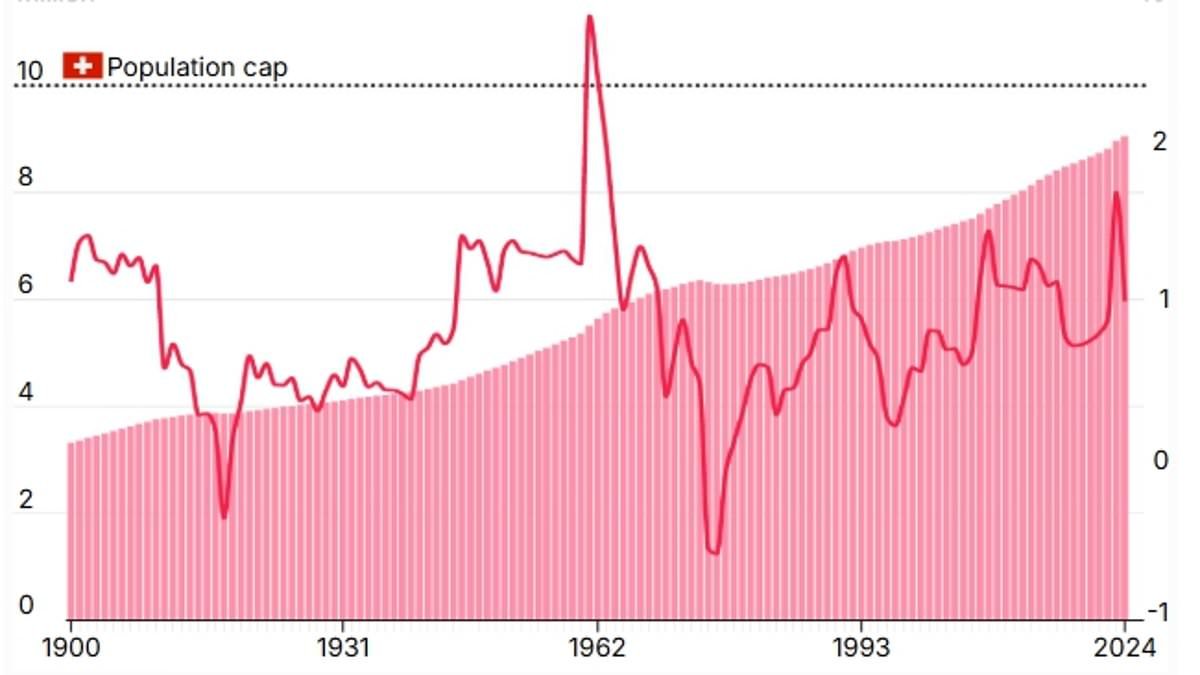
Switzerland has reported that the proportion of foreigners in its population has nearly doubled to 27.4% over the past 40 years. This statistic comes amid ongoing discussions about potentially capping the total population at ten million, a move aimed at addressing concerns related to migration and resource allocation.
What happened
The Swiss Federal Statistical Office released data indicating that the percentage of foreign nationals living in Switzerland has increased significantly since the early 1980s. This demographic shift is prompting Swiss authorities to consider implementing measures to limit immigration and manage population growth effectively.
Why this is gaining attention
The topic of immigration has become increasingly contentious in Switzerland, with debates focusing on its impact on social services, housing, and employment. The proposal to cap the population at ten million reflects growing public concern over these issues. Recent political discussions have reignited interest in how migration policies will shape the future of the country.
What it means
The potential cap on Switzerland's population could lead to significant changes in immigration policy and economic strategy. It may affect labor markets, social integration, and the overall demographic landscape of the nation. Policymakers are weighing the implications of such measures against the backdrop of an evolving global migration environment.
Key questions
- Q: What is the situation?
A: The proportion of foreigners in Switzerland has reached 27.4%, prompting discussions about capping the population at ten million. - Q: Why is this important now?
A: The increase in foreign nationals raises concerns about resources and integration, leading to renewed debates on immigration policy.






 English (US) ·