.png)
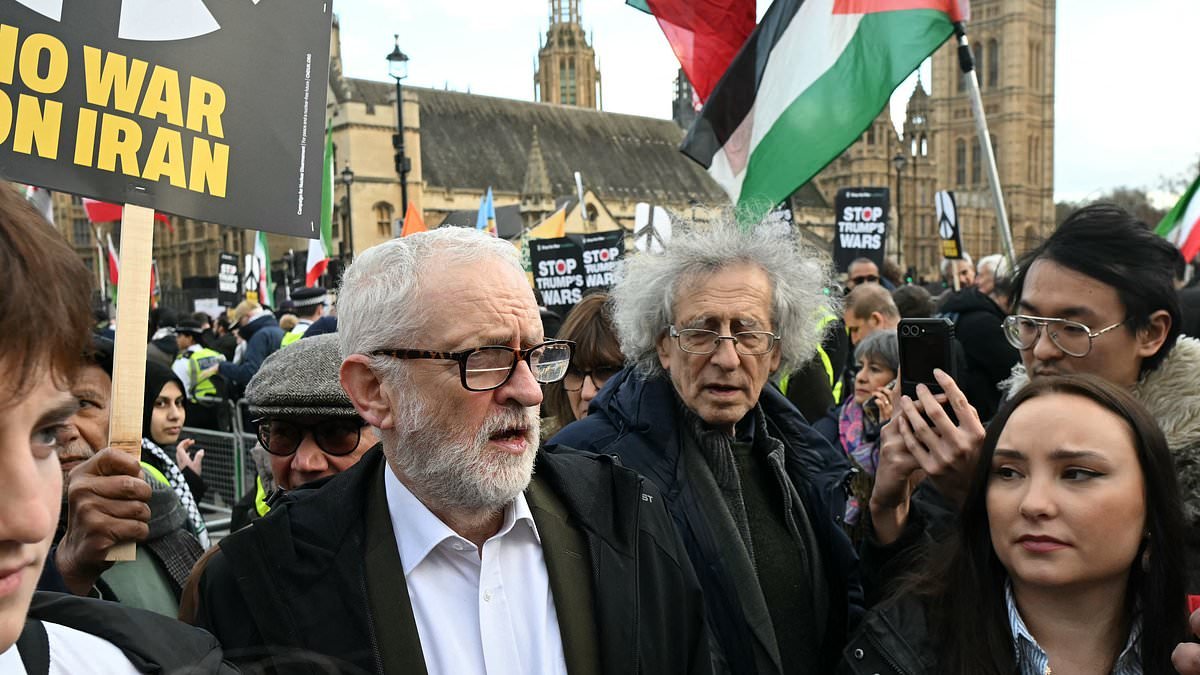
Jeremy Corbyn Joins Pro-Iran Protesters in London
Former Labour leader Jeremy Corbyn participated in a demonstration in London on Saturday, where hundreds of protesters called for an end to what they described as "Trump's wars." The event featured banners depicting Iranian leaders, including the Ayatollah, and highlighted opposition to U.S. foreign policy in the Middle East.
What happened
The protest took place in central London, drawing a significant crowd advocating for peace and criticizing U.S. military interventions. Participants carried various banners and placards expressing solidarity with Iran and condemning perceived aggression from Western nations. Corbyn addressed the crowd, emphasizing the need for diplomatic solutions over military actions.
Why this is gaining attention
This demonstration has attracted media coverage due to the involvement of Jeremy Corbyn, a prominent political figure in the UK. The event coincides with ongoing tensions between Iran and the United States, particularly following recent developments in U.S.-Iran relations. The protest reflects broader public sentiment regarding military engagements and foreign policy decisions.
What it means
The protest underscores ongoing debates within the UK about foreign policy and military intervention. It also highlights divisions among political leaders and the public regarding the approach to international conflicts. The presence of high-profile figures like Corbyn may influence discussions on these issues moving forward.
Key questions
- Q: What is the situation?
A: A large protest occurred in London against U.S. foreign policy, featuring Jeremy Corbyn and pro-Iran sentiments. - Q: Why is this important now?
A: The event reflects current geopolitical tensions and public opposition to military interventions linked to U.S. policies.






 English (US) ·