.png)
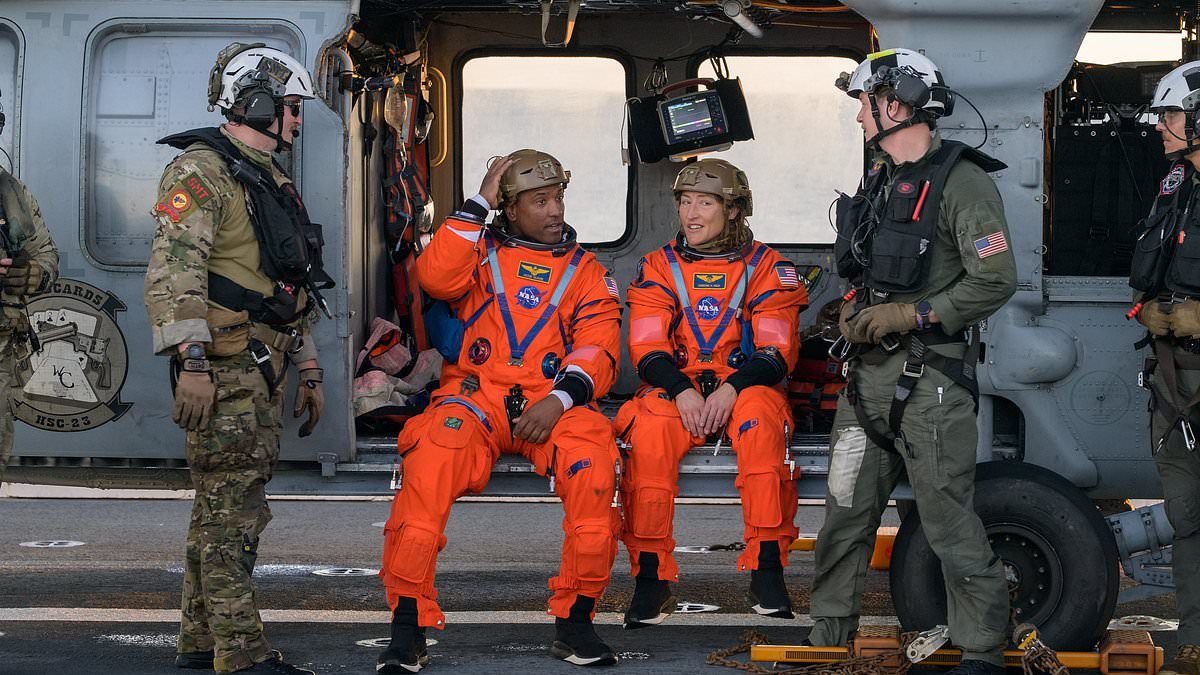
Artemis II Astronauts Struggle to Walk After Pacific Ocean Splashdown
The Artemis II crew has successfully splashed down in the Pacific Ocean after completing a historic mission to the Moon. Upon landing, astronauts experienced difficulty walking as they adjusted to Earth's gravity. This event marks a significant milestone in NASA's efforts to return humans to lunar exploration.
What happened
The Artemis II mission concluded with a splashdown in the Pacific Ocean, following a journey that included a flyby of the Moon. The crew, consisting of four astronauts, faced challenges in mobility upon re-entry to Earth's gravitational pull. Medical teams were on standby to assist the astronauts during their recovery process.
Why this is gaining attention
This event is notable as it represents NASA's first crewed lunar mission since the Apollo program, highlighting advancements in space exploration technology. The astronauts' recovery from microgravity conditions is drawing interest from both the scientific community and the public, as it provides insights into the effects of space travel on human physiology.
What it means
The successful splashdown and subsequent challenges faced by the Artemis II crew underscore the complexities involved in human spaceflight. Understanding how astronauts adapt after returning from space is crucial for future missions, particularly those aimed at longer durations on lunar surfaces or beyond.
Key questions
- Q: What is the situation?
A: The Artemis II crew has returned safely to Earth but experienced difficulty walking due to readjustment from microgravity. - Q: Why is this important now?
A: This mission marks a key step in NASA's lunar exploration efforts and provides valuable data on human adaptation post-spaceflight.







 English (US) ·